Bang Khonthi, Samut Songkhram
Nam Hom coconut
Sweet, refreshing and naturally pandan-fragrant
Young aromatic coconut with sweet water that smells naturally of pandan, and soft, spoonable flesh. Grown the organic way, with no chemicals.
Get to know Nam Hom coconut
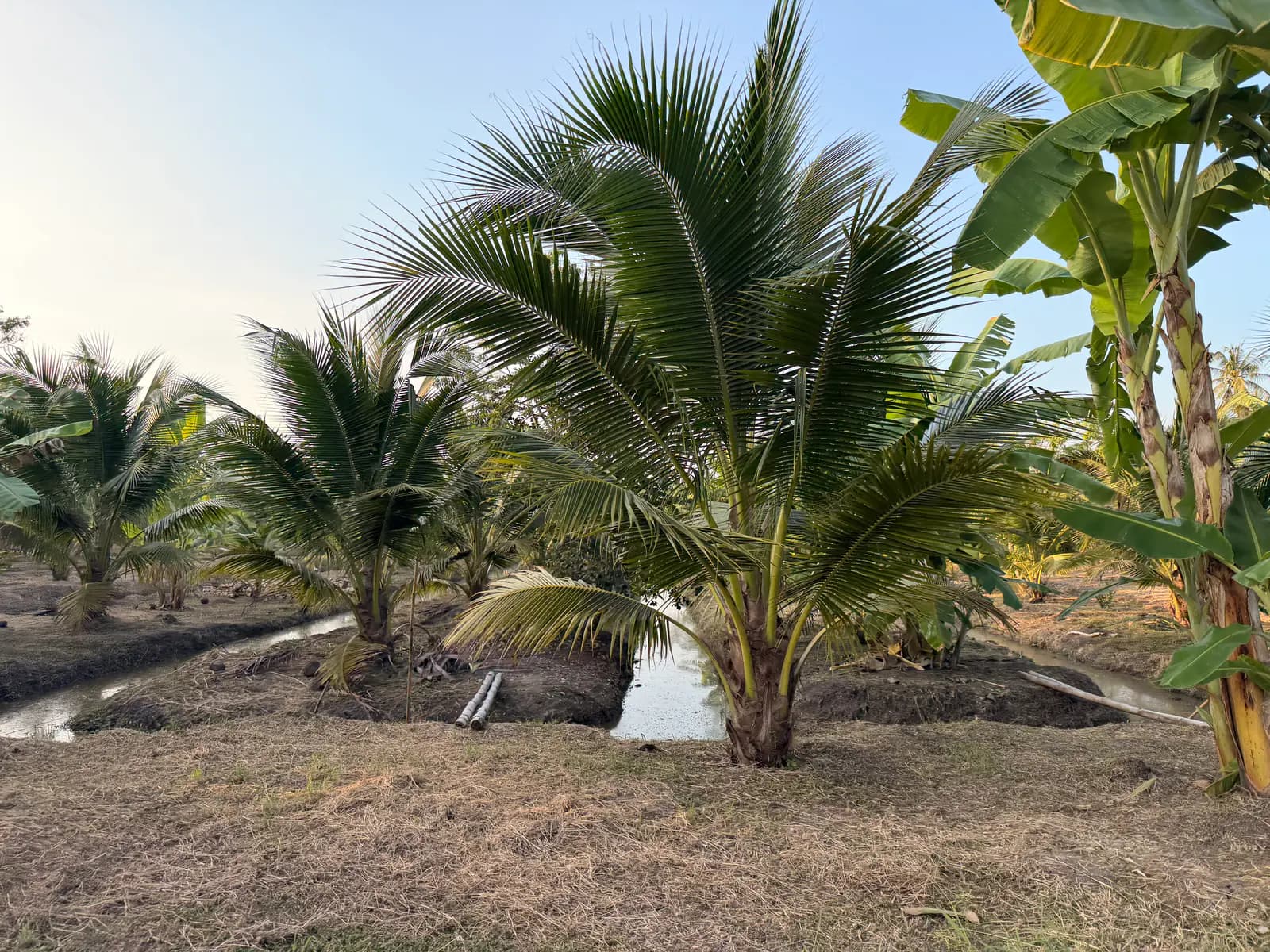
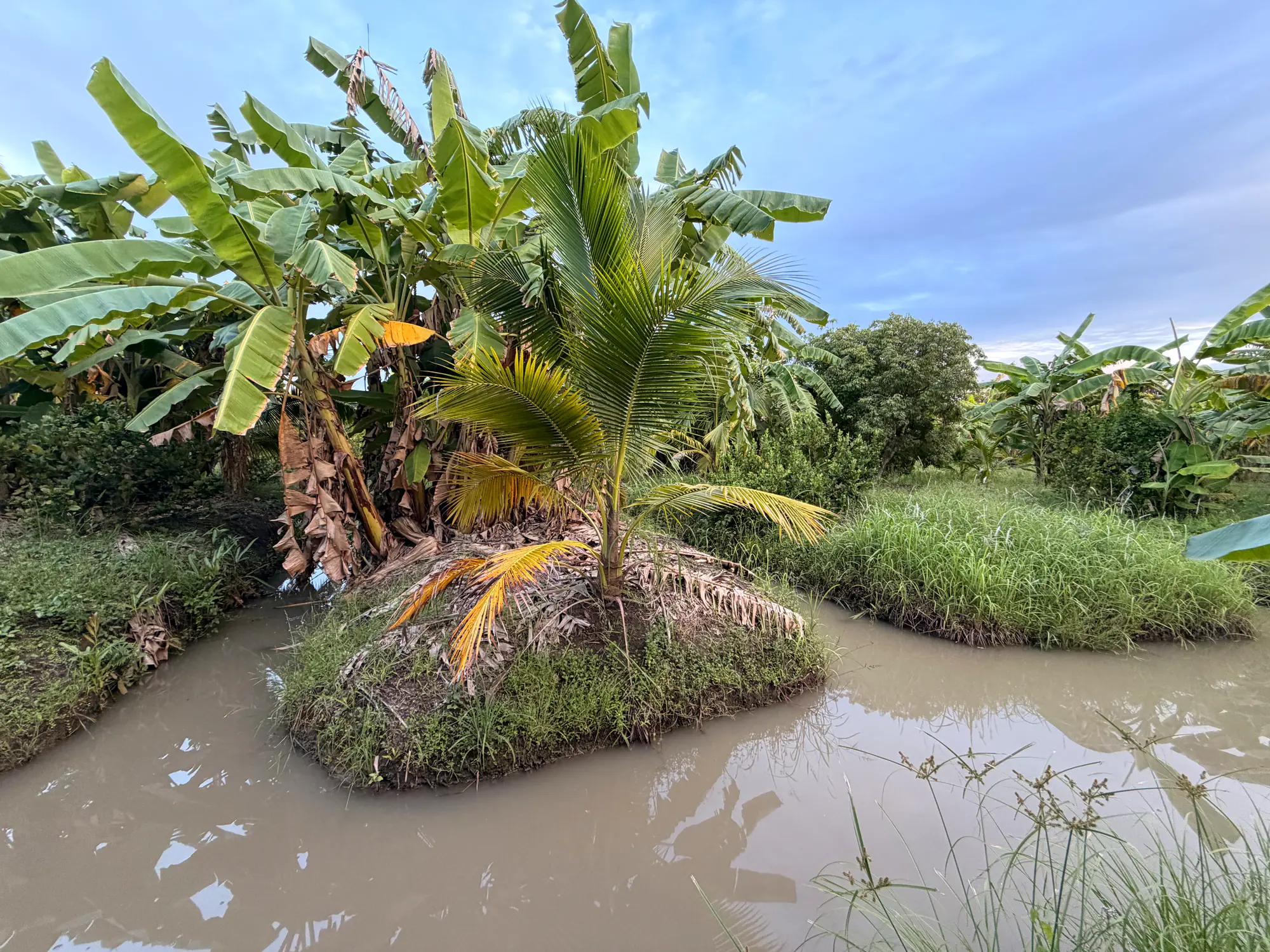
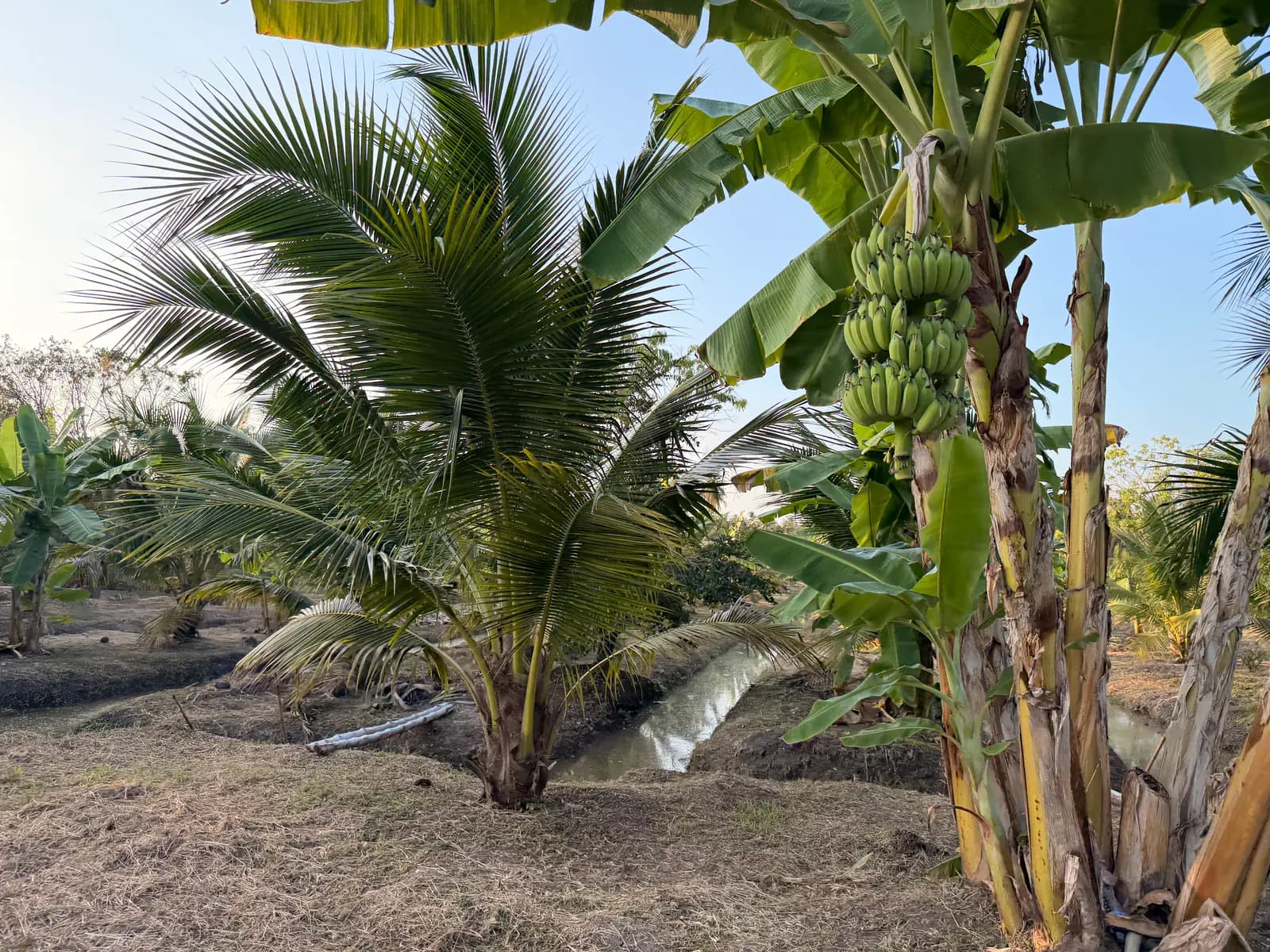
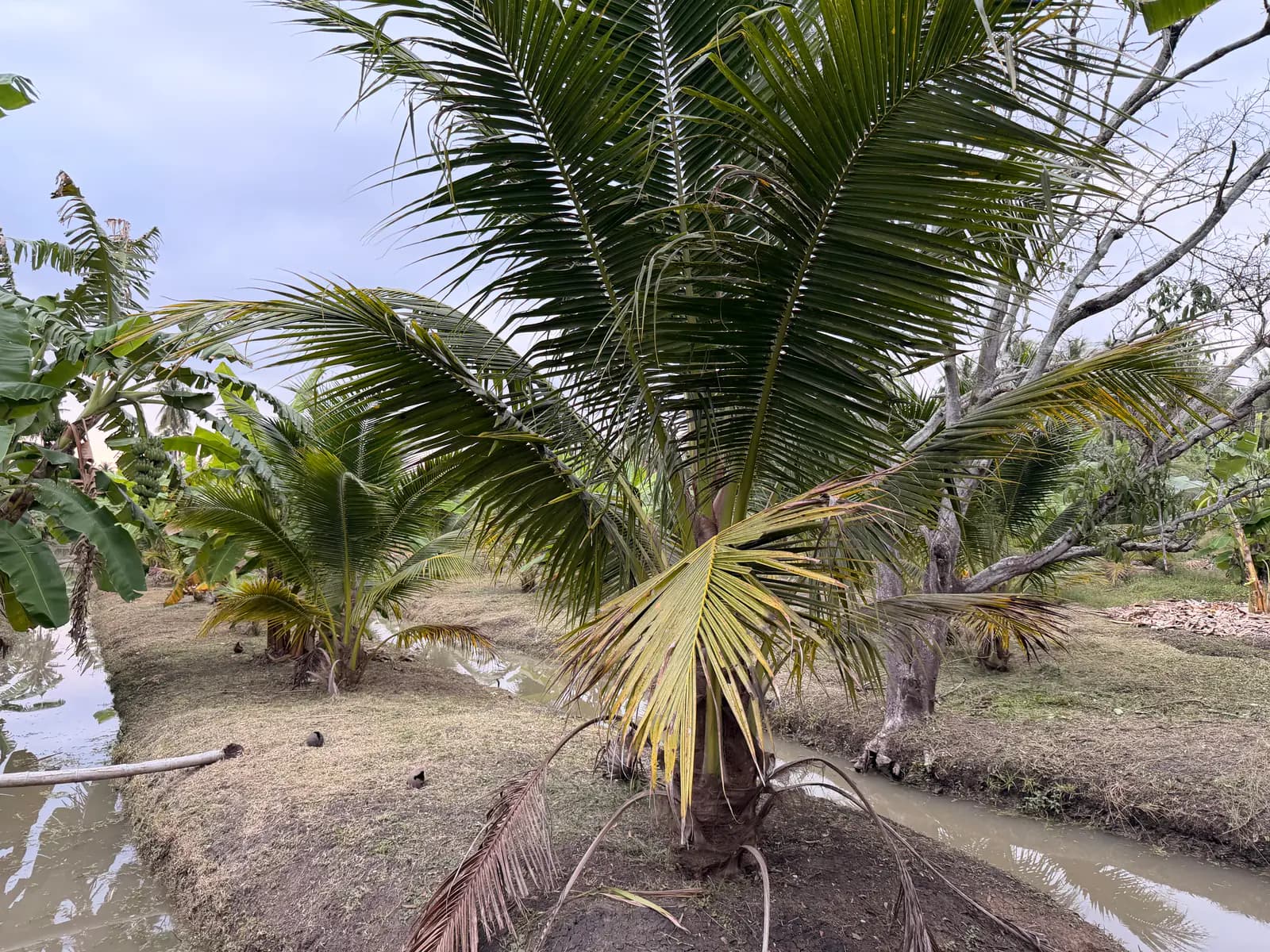
Nam Hom is a dwarf coconut born in Thailand. It arose from the Mu Si coconut in the Nakhon Chai Si river basin, and today its key growing areas are Ratchaburi, Samut Sakhon, Nakhon Pathom and Samut Songkhram, the very corner of Thailand where our farm in Bang Khonthi sits.
Its magic is the smell. The water has a pandan-like scent thanks to an aroma compound called 2AP, the same one found in pandan leaves and jasmine rice. If your first sip reminds you of pandan, you're not imagining it. Sip it fresh, or turn it into young coconut jelly or a young coconut shake.
At Catherine Farm we grow many kinds of plants together, with no herbicides, no growth accelerators and no chemicals, so the soil can stay alive. Curious why? Have a look at why organic.
Wondering whether coconuts are ready right now? Drop us an email.
Highlights
- A dwarf coconut that arose from the Mu Si coconut in the Nakhon Chai Si river basin
- Its pandan-like scent comes from 2AP, the same aroma compound found in pandan and jasmine rice
- Ratchaburi, Samut Sakhon, Nakhon Pathom and Samut Songkhram are Thailand's key growing areas
- At about 7 months the flesh is thick and soft and fills the whole shell, a stage Thais call "song chan" (two layers)
Handy tips
How to choose, store and enjoy Nam Hom coconut at its best.
How to enjoy
- Chill it, pop in a straw and sip straight from the shell
- When the water's gone, split it open and scoop out the soft flesh
- Make coconut jelly with both the water and the flesh, for double the fragrance
- Blend the water with coconut flesh or ripe papaya for a frosty smoothie
How to choose
- Pick one with fresh green skin and no cracks, bruises or insect marks
- It should feel heavy for its size. If the water sloshes loudly when you shake it, it's probably getting old
- Like thin, very soft flesh? Ask for "chan khrueng" (one and a half layers). Like it thicker? Ask for "song chan" (two layers)
- Water with a fizzy tang usually means the coconut was a little too mature
Storage
- Unopened, keep it somewhere cool and shady or in the fridge, and enjoy it within a few days for the best aroma
- Don't keep it very cold for weeks: the husk darkens and the flesh turns dull
- Once opened, it's best to drink it all. Pour any leftover water into a clean, closed bottle in the fridge and finish it the same day
- Keep scooped flesh in a covered box in the fridge and eat it soon
Good to know
- Coconut water naturally contains potassium, about 250 mg per 100 g, and only around 19 kcal (general coconut water data from USDA FoodData Central (opens in a new tab))
- The sweetness is the coconut's own natural sugar, so enjoy it in moderation: a little is all you need to feel refreshed.