Bang Khonthi, Samut Songkhram
Papaya
Crunchy when green, sweet when ripe
A fruit with two personalities: crunchy green papaya for som tam and sour curry, and soft, sweet flesh when ripe. Grown the organic way, with no chemicals.
Get to know Papaya
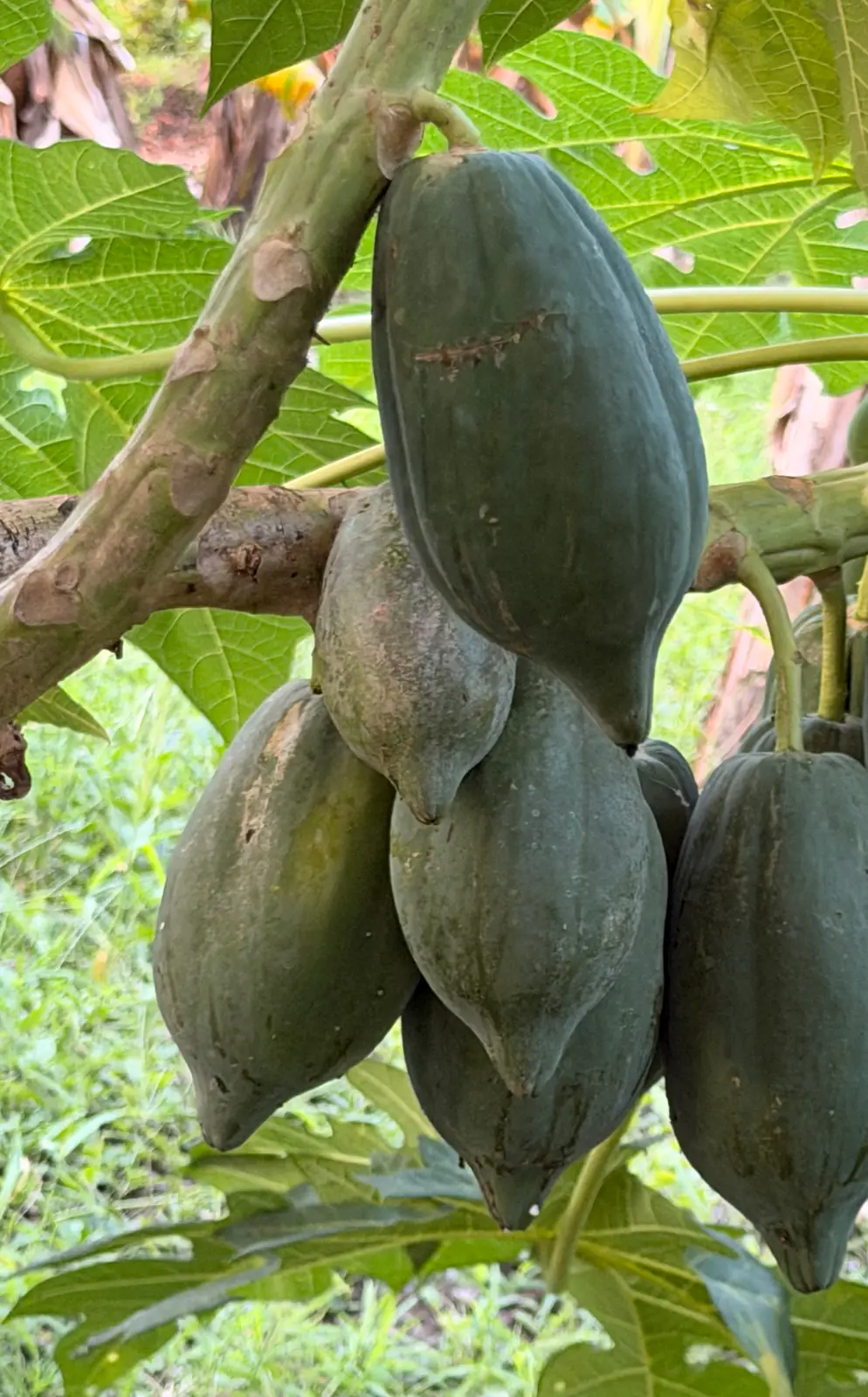
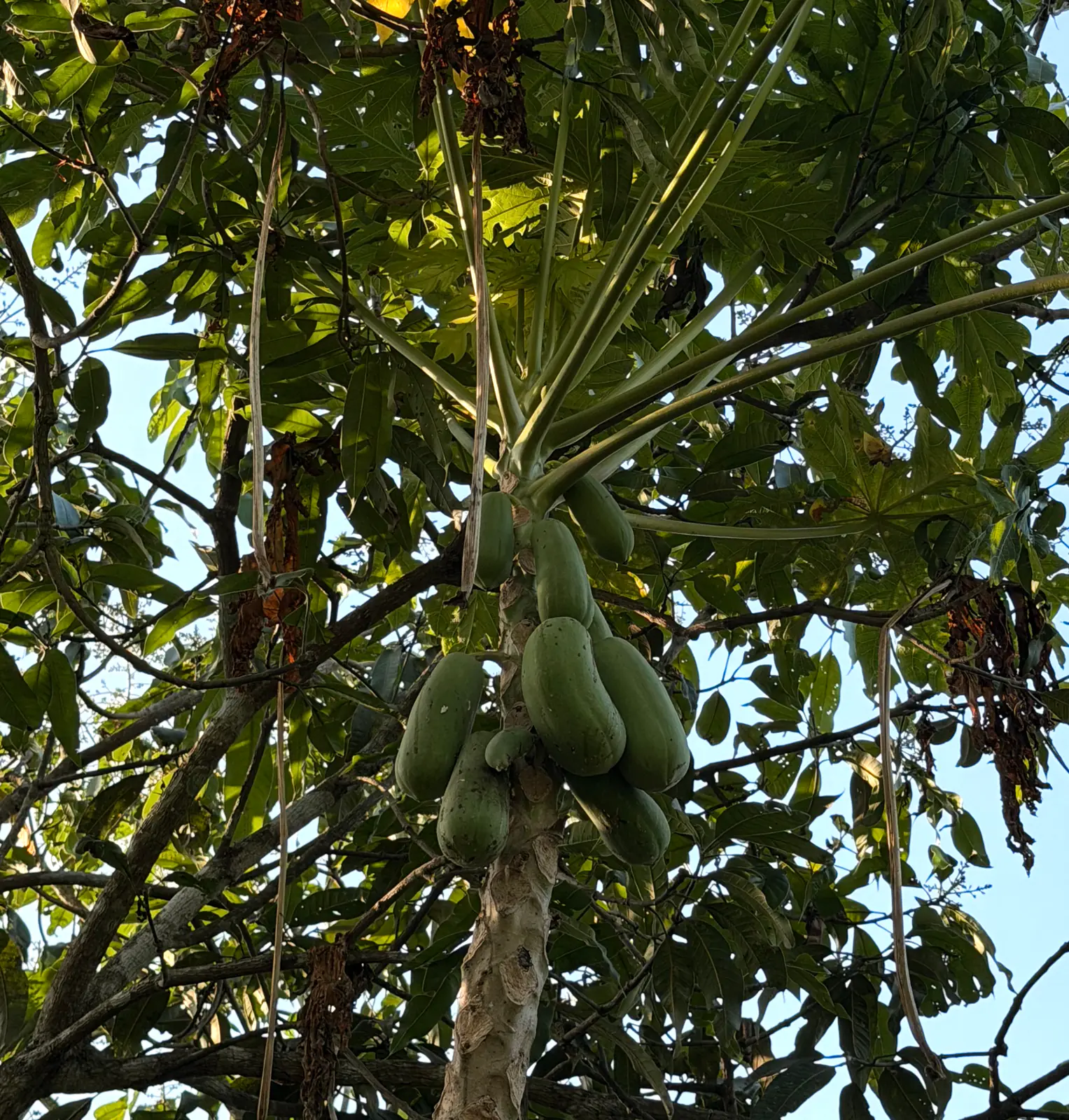
Papaya has come a long way. It's native to tropical America, and Spanish explorers brought it to Southeast Asia around the 16th century. Today it's a Thai kitchen favourite.
Green papaya is white and crunchy inside, the star of som tam Thai and sour curry with green papaya. Ripe papaya turns yellow-orange outside with soft, sweet orange flesh: lovely chilled, or blended into a papaya coconut-water smoothie.
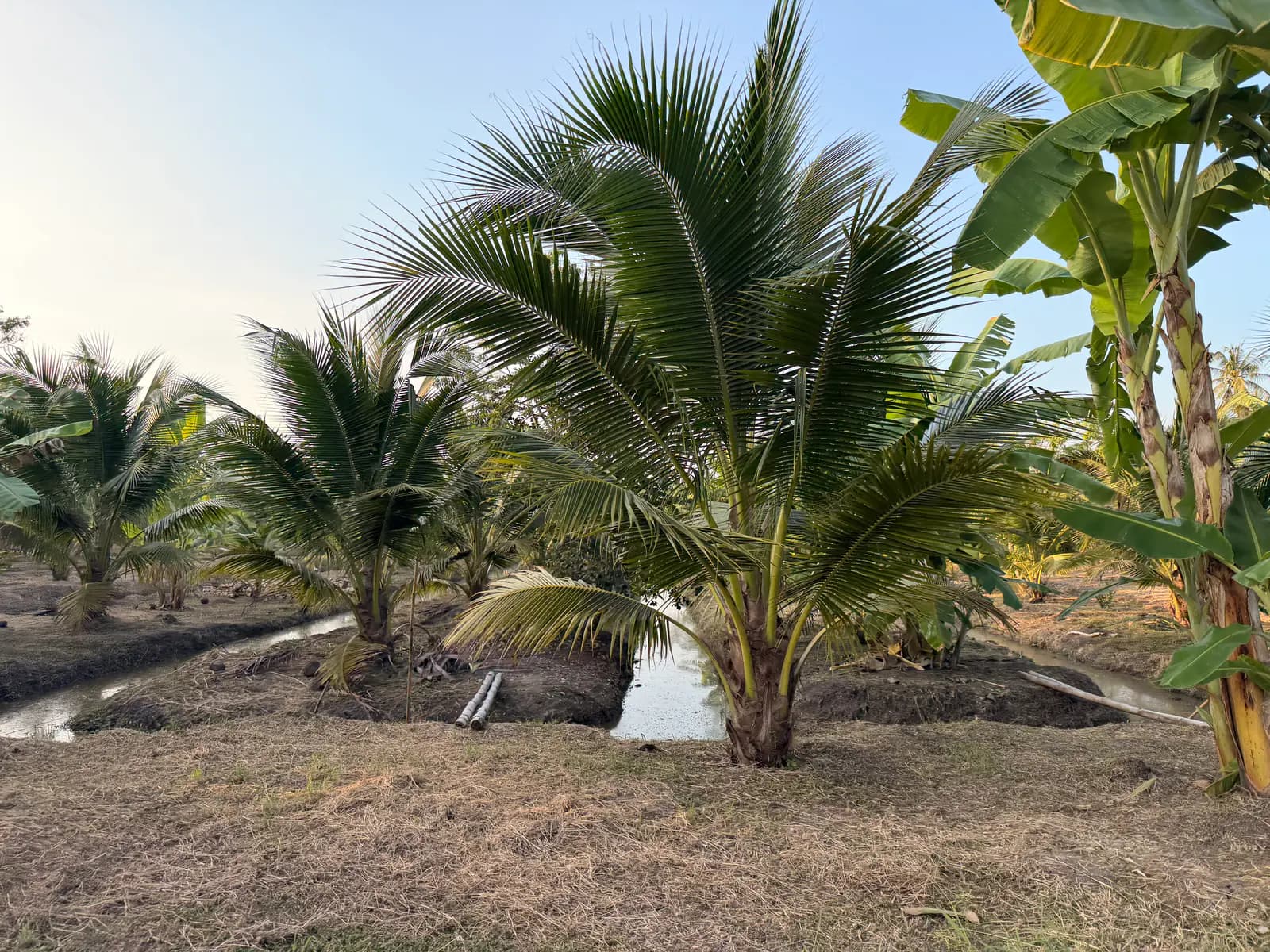
At Catherine Farm our papayas grow in a diverse, mixed orchard, with no herbicides, no growth accelerators and no chemicals. The ReCAP farmers' handbook lists papaya among the intercrops it suggests for coconut farms, too. Read more about organic, soil-building farming.
Want green papaya for som tam, or ripe ones to snack on? Email us.
Highlights
- Native to tropical America; reached Southeast Asia around the 16th century
- Green fruit is cooked like a vegetable; ripe fruit is eaten as a fruit
- Green papaya goes into many dishes: som tam, sour curry, yellow curry and stir-fried with egg
- The white latex in green papaya contains papain, an enzyme that breaks down protein
- Ripe papaya has orange flesh and is rich in vitamin C
Handy tips
How to choose, store and enjoy Papaya at its best.
How to enjoy
- Peel green papaya, shred it and pound it into som tam
- Cut it into chunks for sour curry or yellow curry
- Halve a ripe one, scoop out the seeds and eat it chilled with a squeeze of lime
- Blend ripe papaya with coconut water into a smoothie
- After peeling green papaya, rinse off the latex before cutting. Wear gloves if your skin is sensitive
How to choose
- For som tam, choose papaya that is green all over, taut-skinned and hard, with no yellow yet
- For eating ripe, choose one that is mostly yellow-orange and gives slightly when pressed gently
- Fruit with a few yellow streaks will ripen at room temperature in a few days
- Avoid fruit with bruises, soft watery spots or a fermented smell
Storage
- Keep green papaya somewhere cool or in the fridge's vegetable drawer, and use it while it's still crunchy
- Store shredded green papaya in a covered box in the fridge and use it up quickly
- Let half-ripe papaya ripen at room temperature first, then move it to the fridge
- Wrap ripe or cut papaya well, keep it in the fridge and eat it within a day or two
Good to know
- Ripe papaya is rich in vitamin C, about 61 mg per 100 g, and also provides folate and fibre (general ripe papaya data from USDA FoodData Central (opens in a new tab))
- The white latex in green papaya contains papain, an enzyme that breaks down protein, which is why it's used to tenderise meat (PROSEA (opens in a new tab))